Showing posts with label poetry collection book review. Show all posts

Monday, August 8, 2022

Parts of Me: Lost and Found by Cisel Ozbay – Poetry Book Review

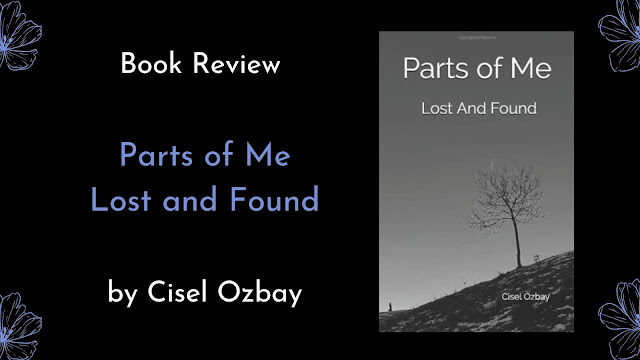
Blog cover feature a book cover of a poetry collection titled Parts of Me: Lost and Found by Cisel Ozbay

Today, I'm featuring one of my really late and overdue book reviews. I first received a copy of Lost and Found from its author Cisel Ozbay in March 2021 and I did read the book a month later. But 2021 was the year of book blogger's block for me and I couldn't write any reviews for months on end. 

So without further ado, here's the book synopsis followed by my review for Cisel Ozbay's Lost and Found, a poetry collection featuring 71 short, free-verse poems.  

Synopsis:

Lost and Found is a poetry book which contains a compilation of short philosophical poems. The book attempts to capture the author's personal journey: all the ways she has lost herself and the lessons that she has found in doing so.

The author deploys a simple writing style, as she believes a lot can be expressed by saying little. This is a deeply meaningful book with many ideas relating to the human experience.


Book Review of Parts of Me: Lost and Found


Parts of Me: Lost and Found opens with “Find,” which is something many people talk about today. It's short and Ozbey says a lot in a few words. 

“To be yourself, you need to find yourself.

And that is all life really is –

Finding yourself.”

“All” is one of the longer pieces in the collection but one of the most beautiful. It’s personal and emotional. Similarly, “Heavy” is a long, dark, and personal piece that I enjoyed.

“Futile” hit home for me because it reminds me of someone who doesn’t see the futility of their ‘lack of efforts’ or the they’re going about their work.

The poem “Contrast” is a good read but it didn’t feel poetic to me. And there were a few poems that were vague to me such as “Ash,” “Consciousness,” among others.

Some of the pieces in Lost and Found read like thoughts, ideas, and quotes. Many pieces had ‘big words’ you normally wouldn’t see in a poem, while others had really formal language. It was the first time for me to see ‘Firstly’ and ‘secondly’ in a poem!

Overall rating for Parts of Me: Lost and Found by Cisel Ozbay: 3 stars.

Note: I received a free copy of Parts of Me: Lost and Found from its author Cisel Ozbay in exchange for an honest review. This did not in any way affect my review.

Note 2: The collection is written in British English.


About the Author:

Cisel Ozbay is an author from London who began writing during her time at university in Aberdeen. She was inspired by her own life experiences and the turbulent times in her life.

Acknowledging the benefits of writing on her own self growth she now writes regularly. Her Parts Of Me: From Me to You, and Parts Of Me: Lost of Found books contain poems written during this same period in her life.

Connect with Cisel and read more of her poetry via Instagram.


Friday, August 5, 2022

Stanley Park by Sapphira Olson – Poetry Book Review

Stanley Park by Sapphira Olsen book review with a book cover and black background


Today, I’m featuring a poetry collection book review. This is one of my late book reviews from 2021. I had received a free copy of Stanley Park from its author Sapphira Olson in exchange for an honest book review.

I had originally planned to read and review Stanley Park for National Poetry Month 2021 or 2022, but due to a severe case of book blogger’s block, this didn’t happen.

So here’s the synopsis for Stanley Park:

A sorrow has taken root in my heart, and although it hurts every day I know there is a place where we laugh together under an open sky.

To that sanctuary, I am travelling.

This is that story. 

Stanley Park is a collection of 35 poems from PARABLES author Sapphira Olson charting the story of two lovers through history as they are separated and then reunited all within the island of Stanley Park in Vancouver. Olson weaves a beautiful and poignant narrative through a progression of emotional poetry taking the reader on a journey of hope driven by love.

Incorporating poems inspired by Squamish Nation history & legends, the collection explores themes of immortality, love, loss, the nature of consciousness and culture.

Stanley Park itself is a beautiful 405-hectare public park that borders the downtown of Vancouver in British Columbia, Canada and is mostly surrounded by waters of Burrard Inlet and English Bay. The park has a long history and was one of the first areas to be explored in the city.

"What shall it profit you if you turn the whole world into a gasometer and lose your own souls?" Thomas H. Mawson about Stanley Park in his 1912 address to the Canadian Club.

Book Review of Stanley Park


Stanley Park by Sapphira Olson is a poetry collection comprising 35 poems of varying lengths. Sapphira's poems are mostly free verse but they paint a vivid picture and setting.

The collection opens with a few famous quotes. And I liked that 😊

The first poem in Stanley Park is “Arboretum,” a beautiful piece with lots of visual imagery along with some religious and mythological references.

I loved this stanza from “Arboretum”


I also loved the piece titled “Awkward Motion Towards a First Kiss.” I read it twice to let it sink in. The poem starts with long lines and slowly the lines grow shorter as the emotions grow stronger. 

As you read Stanley Park, you’ll notice a few recurring themes such as finding a lost love, connecting and getting back together, and finding the person you love. 

“The Great World of Womanhood” is a long but stunningly beautiful story. I didn’t feel it was poetic, more like prose than poetry but I loved it all the same.

“The Hollow Tree” was another piece that didn’t feel poetic for me. I didn’t understand the story in it but wanted to know more about it. It’s a sad piece.

At the beginning of the book, Olson includes a map of Stanley Park, which Olson clearly has a strong connection with. However, as a reader with no knowledge of the place or background about the author, I felt a bit lost and confused with some pieces, especially those that focused on Stanley Park as a location with memories for Olson.

“The Love of Silent Replies” is a poem that combines reality with mythology. Enjoyable and beautiful.

There were a few pieces in Stanley Park that I didn’t understand. I guess the author had something specific in mind while writing them or that they related to something personal of hers. They weren’t clear to me.

“The Women of Sagalie Tyee” is a beautiful story within a poem that gives this feeling of transcending. Meanwhile, “The Secret of Eternal Flight” is one of those non-poetic pieces, in my opinion. This was made even more so by the use of long and big words like ‘morphological.’

“If Ever a Woman Lost a Throne” is one of the longer but most beautiful pieces in Stanley Park. It celebrates womanhood and offers a stand against the ‘white man’ theme. 

I absolutely loved “When the Whole World Was in Bloom,” which opens with:

“We fashioned ourselves from a treasure house of stories,

When the whole world was in bloom.

A moment of ascension: just the two of us,

A fertile soil over sandstone and shale.”


Other highly recommended poems in Stanley Park:

  • “We Fall in Love with Stanley Park”
  • “The Journey”
  • “The Roses Bloom in June”
  • “The Storm”
  • “A Supernatural Footnote”
  • “A Land of Splendid Beauty”


Overall, I thought Stanley Park by Sapphira Olson was a beautiful and visual poetry collection. Though I found some of the pieces to be confusing, I enjoyed many others (mentioned above). 


Overall rating of Stanley Park by Sapphira Olson: 3 stars

Note: I received a free copy of Stanley Park from its author Sapphira Olson in exchange for an honest review. This did not in any way impact my review.

Add Stanley Park by Sapphira Olson on Goodreads. 


Sunday, July 17, 2022

Aches and Epiphanies by Aries - Poetry Book Review


Today, I'm featuring a belated book review for Aches and Epiphanies by Aries (pen name).

Cover image showing book cover for Aches and Epiphanies by Aries along with text saying the same


About the book:

Aches and Epiphanies is a collection of poetry, prose and thoughts from poet and songwriter, Aries. From love lost to happiness found; from pain to joy and vice versa. The words of the unspoken and raw human emotions come to the fore.

For those who have stood face to face with love and it has been terrifying or have hidden secrets behind closed doors. For those who find comfort in the hands of another, you will learn, page by page. As the universe takes its last breath, it looks at you with glittering eyes and smiles. You were worth the destruction.


Book Review of Aches and Epiphanies

Aches and Epiphanies by Aries is a poetry collection featuring a large number of poems. The book is divided into chapter-like section representing chapters from the poet’s life or focusing on specific themes.

The first section is called “Aches,” and features several poems, each of which seems to be divided into several shorter pieces. I found this to format to be rather confusing because I wasn’t sure if the pieces where standalones or if they were part of a larger piece. But they were quite relatable.

I loved “A Letter to the Ones After Me” and the second part or poem in "Real" which depicted a very flawed and feeble character.

“Grey” and “Salt and Pepper” are two must-read poems in this section, while “Love Decides” is a stunning albeit painful piece.

One of the interesting and beautifully written pieces in Aches and Epiphanies is “14.2.2016” which I gather the author Aries wasn’t sure about how to name the piece so she used the date in which it was written or the date of the event that prompted it.

“A Beautiful Mess” is a cute poem written about people just starting to fall in love.  On page 68, there’s a beautiful entitled piece. One of many untitled pieces. There are also several one-line, two-line, and three-line poems, which though beautiful result in lots of white space.

I’d be particularly annoyed if this book were in print because of the wasted paper. It’s not something I’d normally comment on but it was particularly noticeable in this poetry collection.

Pages 75 & 76 feature thought-like pieces that are written as if the author is talking to someone. The untitled piece on page 78 is a painful poem about two people growing apart.

I also enjoyed the various untitled pieces in Aches and Epiphanies scattered on pages 90 to 92. I also enjoyed “Learning to See the Good in Goodbye,” “Stars,” and “Get Lost,” which I found to be beautifully-written and emotional.

Unfortunately, I couldn’t count the number of poems because many of them are untitled or because of the way they are divided. That’s why I opted to use page numbers as well.

Overall, I enjoyed reading Aches and Epiphanies by Aries. The collection features many deep, raw, and emotional poems. As a poet, I understand how hard it is to title poems. So, I totally relate to the untitled pieces. 😊

Overall rating: 3.5 stars


Note: I received a free copy of Aches and Epiphanies from its author Aries in exchange for an honest review. This did not impact my review in any way.

Note: I got my copy back in 2021 but due to a writer’s block, I’m just posting it now due to a bad case of book blogger's block (That's a thing! At least for me, it is.)


Saturday, May 16, 2020

The Sun and Her Flowers by Rupi Kaur - Book Review


I hadn't heard of Rupi Kaur before but when I picked up The Sun and Her Flowers by chance, I discovered she's popular contemporary poet and author. I also learnt that this is her second – and apparently widely anticipated – poetry collection.

That said, when I started reading I felt that there was such a big hype about this book and that I was put off by it.  

The Sun and Her Flowers by Rupi Kaur is divided into 5 chapters: Wilting, Falling, Rooting, Rising and, Blooming.

I felt that the poems, or rather short quotes first two sections were sappy. I was put off by them and was seriously considering NOT finishing the collection. However, the third section "Rooting" showed a significant change in both the content and level of writing, as if the author had suddenly grown up.

Most of the poems in The Sun and Her Flowers are untitled, a few have the sort-of-title at the end, and every now and then there is one long piece with a title. This makes it quite hard to point out which pieces I liked (which weren't that many).

"love does not look like a person
love is our actions
love is giving all we can
even if it's just the bigger slice of cake
love is understanding"

The above extract is from "what love looks like" one of the longer pieces in Kaur's collection. Another long one is "questions" which ironically has no question marks. It's also long, dull, and sappy, unlike its predecessor.

Another thing about punctuation is that The Sun and Her Flowers has zero punctuation. I know many poets are doing this with their poetry nowadays BUT the problem lies when as a reader I can't tell if the line I'm reading is meant as a thought or question. There were parts when I was utterly lost and only realized that I should have been reading questions not thoughts. The confusion irritated me.

"why are you so unkind to me
my body cries
cause you don't look like them
i tell her"

Many pieces aren't poetic or what I'd describe as poetry; more like quotes. You know those quotes people share on Instagram and Facebook. They're great, just not poetry in my opinion.  I found some of the pieces to be recitable but not poetic, like "home" a long sad piece about a rape.


Starting "Rooting," many poems focus on the themes of maturity, womanhood, being an immigrant and a refugee. Starting this section, we see a major change and development from the previous sections; lots of growing up.

One of the strongest pieces in The Sun and Her Flowers is in "Rooting" and it's called "advice i would've given my mother on her wedding day." This piece is a mixture of short poem-like-pieces and 'bits' in the form of bullet points and advice. The first advice is "you're allowed to say no."

The poem "accent" is one of the stronger pieces in the collection. One of my favorites too.
(image)

There's a lot of experimentation in The Sun and Her Flowers. Some good, some not so much. But that's the normal case with poetry collections. You can't like every piece.

The saddest poem in The Sun and Her Flowers is "female infanticide," which shows women struggles in the course of hundreds of years. I loved the progression. Despite centuries passing, women are still struggling. 10 stars to this one.

Every few poems are accompanied by some artwork, I don't know what this type of art is called but it's not paintings. Also, some pieces are in short paragraphs.


One of the things I disliked about The Sun and Her Flowers, and I'm glad I had an e-book for this not a print one, is that some pieces were just a line. Yes, a page with one line and move on. That's wasted paper if you ask me. I suppose I don't view one-liners as poetry but at least they could have been combined in a single page with *** between each.

Another thing is the flow of the pieces; many aren't what you'd call poetic. They read like prose, including the poem "broken english." It's a great piece but it would have been better off placed in paragraph format than an attempted poem. It also had many words that felt like the Kaur was showing off vocabulary and was distant even though the poem is about her mother.

Overall, I have mixed feelings about Rupi Kaur's The Sun and Her Flowers. I was expecting a lot more from it. It's a good read, not amazing. There are powerful poems but there many weak ones. I think the "bestselling status" earned from the first book made many people pick this up.

The book's style reminded me of Amanda Lovelace's poetry collection The Princess Saves Herself in This One. The style being, the short pieces and the titles being the conclusion of the poem.

Overall rating for The Sun and Her Flowers by Rupi Kaur: 2.5-3 stars.


Wednesday, April 22, 2020

A Collection of Dreamscapes by Christina Sng – Book Review

Book: A Collection of Dreamscapes
Author: Christina Sng
Genre: Poetry Collection, Twisted Fairy Tales, Dark Poetry
Publisher: Raw Dog Screaming Press
Publication Date: 16 April 2020

Number of pages: 170


A Collection of Dreamscapes by Christina Sng is a poetry collection divided into 5 sections and featuring an array of beautifully dark poems.


I particularly enjoyed the rewritten "Fairy Tales" and "Myths and Dreamscapes" sections.

A Collection of Dreamscapes opens with "Allegra," a 5-star stunning and beautiful mythological story within a poem. I absolutely loved this one. I must note though, that the poems in this opening section should be read in order – as I realized – but you will enjoy them nonetheless.

As I said, I loved the "Fairy Tales," where Sng takes on common tales like Little Red Riding Hood, Snow White, Beauty and the Beast and twists them all. Sng also has several different stories/poems about a single fairy tale, like Rapunzel.

My favorites were: "Little Red," "Snow," "The Girl from the Tower," "Jack and the Giants," and "The Mermaid."

"Snow," the poem on the Snow White and Seven Dwarves tale, is different from anything I've read. Sng introduces ideas such as social media into the story. That said, I felt the poem was a bit long, less poetic in some places, and unbelievable in others. Still, it was definitely a far cry from the prince charming theme known for these types of tales but still Snow White wasn't the strong woman, unlike Sng's version of The Red Riding Hood.  

An interesting take is Sng bringing the modern world into the fairy tales. Interesting but a bit jarring still. You can find this in "Snow" and "Rapunzel."

"Beauty Sleeps for a Century" is a good rewrite of the Cinderella story, however, there was a significant repetition of "but" throughout that, for me, disturbed the flow of the poem.


I also liked how Sng mixed some of the tales together as you'll see in "Cinderella," "Always a Beast" and "Living Well Is the Best Revenge."

I absolutely loved "When There Are Monsters." It’s a dark and powerful piece and easily relatable to the real world, where monsters aren't just confined to books or TV screens.

The poem "The Monsters Within" is one of the more gruesome pieces in A Collection of Dreamscapes. It sent shivers down my spine. Similarly, "Violation" is a dark, gruesome and heartbreaking piece.

"In the Tall Grass" is a full on sci-fi poem. And I've never read a poem like it before. It's interesting, exciting, and definitely different.

I absolutely loved "The Lady of the Lake," with Sng's take on it; dark but brilliant. I wish I can quote it whole.


"The Joy of Sewing" is a creepy and gruesome piece that reminded me of the movie The House of Wax.

One recurring problem for me with A Collection of Dreamscapes is that many of the pieces read as more prose than poetry. An example of this is seen in "The War of the Fall," which has a great story but is not very poetic. I also found the sequence of the poem to be a bit confusing.

I have no problem with free verse, I write in it mostly myself but when writing in free verse there is a fine line between just dividing your sentence and having poetic flow to the piece. At the end of the day, you want people to read your free verse pieces as poems not as a newspaper article.

Other recommended pieces in A Collection of Dreamscapes: "Margritte of Mer," "Concepts," "Lobotomy," "Annalise Wanders the Forest," "Noonwraiths," and "The Tooth Collector."

Overall rating for Christina Sng's A Collection of Dreamscapes: 4 stars

Originally I rated this collection 3 stars, but upon an inspection while writing the review, I think the book deserves 3.75 to 4 stars.

Note: I received an advanced reader's copy (ARC) of A Collection of Dreamscapes by Christina Sng from Erin Sweet Al-Mehairi. This review is part of National Poetry Month.


Saturday, April 4, 2020

Fire Molten and Ash by Clarence Barbee - Book Review


Fire Molten and Ash by Clarence Barbee is a short and diverse poetry collection divided into 3 parts: Heat, Fuel, and Oxygen; kind of like the recipe you need to get a fire started.

When I first started reading Fire Molten and Ash I felt lost in the pieces. I liked some parts of the wording and how Barbee phrases his pieces but I was lost. I'd read the poem from start to finish, silently or out loud, but in the end, I wouldn't 'get' it.

Bit by bit, I got used to Barbee's style and there were a few political poems in there; some of which I could relate to, because who hasn't been keeping up with news about US politics, but some were too US-focused for me. For those who don't know, I'm an Egyptian living in Egypt so the details of US politics can sometimes evade me (especially now that I no longer work in the news business).

But back to Fire Molten and Ash, there were a few pieces that wowed me including "Crudeship," one of those political pieces.

Many of the poems in this collection are relatable, especially "To Continue" and "Sometime Before Tomorrow and 5pm," which talk about life and work and the two combined. These two pieces were 5-star poems for me.

I also loved "#Fragile II." It's a brilliant poem, using the hashtag #vss which is short for 'very short story.'  All of the pieces in the second segment of the book "Fuel" have the #vss hashtag.

I read Fire Molten and Ash in one sitting in March but I've postponed the review to April to coincide with National Poetry Month.

Overall rating for Fire Molten and Ash is 3 stars.

Note: I received a free copy of Fire Molten and Ash from its author Clarence Barbee in exchange for an honest review. This did not in any way affect my review.